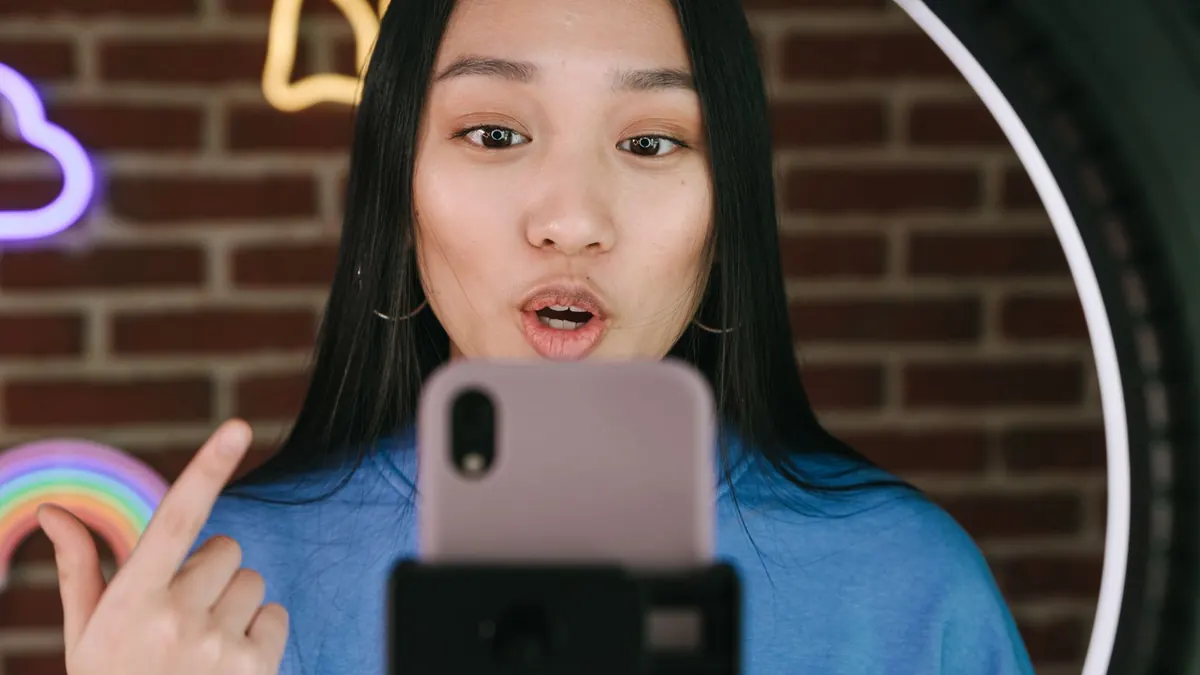
A short-form video hook is the opening line and image that tell someone mid-scroll what a clip is about and why it is worth staying for. For a business posting Reels, TikToks or Shorts, the short answer is to state the subject in the first sentence, put the same words on screen, and cut everything that comes before them. The “three seconds” attached to that advice is not a law of attention. It is the threshold Meta happens to count, and each platform counts something different.
- Three seconds is a metric — Meta counts 3-second plays, TikTok 2- and 6-second views, YouTube a view from the first frame
- Lead with the subject — Meta’s own guidance puts the most important message in the first three seconds
- Say it twice — out loud and on screen, so the hook survives a muted feed
- Cut the run-up — greetings, intros and “so, today…” spend the window on nothing
- Test the hook, not the clip — repost the same video with a new opening and compare
Where “the first three seconds” comes from
The number is a measurement before it is advice. Meta’s ad reporting counts a 3-second video play each time a video plays for at least three seconds. TikTok’s Ads Manager draws its lines elsewhere, reporting 2-second and 6-second video views. YouTube went the other way in 2025 and dropped the watch-time requirement for a Shorts view altogether:
Views will count the number of times a Short starts to play or replay, with no minimum watch time requirement.
That change took effect on March 31, 2025, so a Shorts view count no longer says whether anybody stayed. The figure that does is viewed versus swiped away in YouTube Analytics: the share of viewers who kept watching instead of scrolling past.
So the window runs from the first frame to the sixth second, depending on who is counting. What the platforms agree on is that the decision happens early. Meta’s advice to businesses making video ads:
Showcase your most important message—like event details, a special offer or a popular service—within the first 3 seconds of your video.
What a hook has to do in that window
A viewer arrives with no title, no thumbnail and no idea who is talking. In a couple of seconds the opening has to do three things:
- Name the subject — the viewer should know what the clip is about before they know who is in it
- Give a reason to stay — a question left open, a claim that sounds wrong, or a result they want to see happen
- Work without sound — the same line as text on screen, for everyone scrolling with the sound muted
The strongest openings do all three in one sentence: spoken to camera, written across the top of the frame, and about something the viewer already cares about.
Four openings that work for a business
Most businesses want to be useful to a specific person quickly, and these four patterns manage that without any performance.
The question your customers already ask
The questions that arrive by email, phone and WhatsApp every week are hooks someone else has already written. “Do I need a website if I have Instagram?” works as an opening line because the person it is for recognises it as their own question. A business that keeps a list of the questions customers repeat already has a list of openings.
The correction
“Most people think X. It’s actually Y.” A claim that contradicts what the viewer believes gives them a reason to wait for the explanation. It only works if the correction is true and the clip delivers it. Otherwise it is bait, and viewers remember the account that baited them.
The result first
Show the finished thing, then rewind to how it got made: the clean carpet before the cleaning, the new homepage before the brief. The opening frame does the work a sentence would, so the hook lands even for someone watching with the sound off.
The specific number
“Three things to check before you sign a hosting contract” promises a defined amount of value and an end point. It tells the viewer what they are committing to, and that is a reason to start.
Write the first line before you film
Hooks improvised on camera tend to open with a greeting, a name and “so, today I want to talk about…”. That run-up is where the first two seconds go. Write the opening line down, keep it to about a dozen words, and say it first. The introduction can come after it, or not at all. Writing a month of opening lines in one sitting is also the first step of batch filming a month of short-form video in one session.
A written headline has the same job, and the same test applies: could a stranger tell what this is about from the first line alone?
Then test the hook in isolation. Post a clip, and a week later post the same clip with a different opening. Everything after the first few seconds is identical, so any difference in how many people stayed comes down to the hook. The guide to repurposing long-form video builds this test into its posting schedule: in week four, the best clip from week one goes out again with a new opening.
Also Read: 10 Essential SEO Blog Best Practices and Tips to Boost Website Traffic
Key Takeaways
- “Three seconds” is Meta’s counting threshold — TikTok counts at two and six, and YouTube counts a Shorts view from the first frame
- A Shorts view count no longer measures attention — viewed versus swiped away does
- The opening line names the subject — before the speaker’s name, the greeting or the logo sequence
- Customer questions are ready-made hooks — the person they are for recognises them instantly
- Change one variable at a time — the same clip with a new opening is the cleanest test of a hook
Frequently Asked Questions
Should my logo appear in the first three seconds of a video?
Both Meta and TikTok say yes. Meta’s lesson on Instagram posts advises businesses to introduce your logo within the first 3 seconds so people can become familiar with the brand even if they don’t watch the entire reel, and TikTok’s Creative Center tells advertisers to ensure the main branding cues are in the first three seconds. In practice that means a logo in the corner of the frame or on the product. An animated title sequence is a different thing, and five seconds of one uses up the whole window.
Why do my YouTube Shorts get views but nobody seems to watch them?
Since March 31, 2025, a Shorts view counts the moment playback starts, so the view count no longer says whether anyone stayed. YouTube kept the old figure under a new name. Its Help Center says it will keep the existing Shorts view metric, now called Engaged views, in YouTube Analytics so you can see how many viewers chose to continue watching your video. A big gap between views and engaged views usually points at the opening seconds.
Is three seconds really how long a hook has?
It depends on who you ask, and most of the answers are shorter or vaguer than three. TikTok’s Creative Center calls the first 3-6 seconds of an ad precious. Shorts creator Jenny Hoyos, interviewed on YouTube’s official blog, puts it at one: she says she really does think you have one second to hook someone, especially on Shorts. Three seconds is best read as the outer edge of the window.
How do I measure whether a hook is working?
Compare clips against each other rather than against benchmark figures published online, which mix industries, formats, and paid with organic posts. In Meta’s ad reporting, divide 3-second video plays by impressions. On YouTube Shorts, read the viewed versus swiped away percentage. The most useful comparison is the same clip posted twice with two different openings, because everything after the hook stays the same.
Does a hook have to be spoken out loud?
No. Meta’s lesson on Reels creative best practices lists text, visuals and audio as the material a hook can be made from, alone or combined. A spoken line on its own fails anyone watching with the sound off. A strong opening image, such as the finished result, can carry a hook with no words at all. The safest default for a business is the spoken line with the same words on screen.
Final Thoughts
The three-second rule is useful as long as it is read for what it is: the point at which one platform starts counting. The work it describes is simpler than the number makes it sound. Say what the clip is about, in words a stranger understands, before saying anything else.
Write that line before the camera is on, put it on screen as well as in the audio, and then test it the only clean way there is, by changing the opening and nothing else. A few rounds of that teach more about an audience than any list of hook formulas.
Know what you want to say, but not how to open it?
ClubUnbrick writes and produces short-form video for businesses, starting with the opening line, so every clip says what it is about before the viewer scrolls on.
What We Offer
- Hook and concept ideation — Opening lines written deliberately for each platform, not improvised on camera
- Paid ad content — Ad-specific creative with stronger hooks, direct calls to action and variations to test
- Repurpose what you already have — Podcasts, webinars and talks cut into clips that open on the point
- Captions and platform formatting — On-screen text so the hook works with the sound off
Get hooks written for my videos
Send us one clip that didn’t perform and we’ll show you three ways it could have opened.